How the Words You Use Shape Your Life
A reflection on how the words we repeat to ourselves shape our identity—and how choosing them with care helps us create a more beautiful, intentional life.
Tammy Renée | Creating the Beautiful Life
4 min read

They are just two little words: “I am. . .”
However, when followed by an intentional choice of how that sentence ends, those two little words can begin to change the way we see ourselves and what’s possible for our lives.
I was first introduced to this simple practice years ago in my counselor’s office. I don’t recall what I was relaying to her, but after I finished speaking, she said, “I don’t think you realize how these thoughts you have about yourself are sabotaging you.” She continued: “Let’s try reframing this with an 'I am. . .' statement.”
And just like that. . . those two little words shifted something subtle but lasting in me that day. It’s been many years, and I still use ‘I am’ statements daily – so much so that it’s become second nature to me now.
Now, I will catch myself when those familiar, critical thoughts bubble up and intentionally respond with an ‘I am’ statement.
For example, in response to my thinking, “This is too hard. I can’t do this.” I follow it up with:
“I am a woman who has overcome many difficult seasons, and I will find my
way through this one, too.”
These two simple words can affect how you perceive yourself and your circumstances. They are far more than positive affirmations; they are words used to articulate who you are growing into – and who you will be going forward. With each statement, you are gently shaping who you become.
Your Words Create Your World
Whether you realize it or not, you are continually reinforcing your identity. For example, from the moment you wake up in the morning until you go to bed each night, what phrases do you say to yourself most often? Possibly. . .
"I can't handle this."
“I'm always making a mess of things."
"I'll never understand this new technology."
These statements may seem like simple observations, but when you repeat them in your head over and over, they begin to feel true.
Your mind is always listening to the script you give it. Then, throughout the day, in the background–without you even realizing it–your brain is constantly scanning the environment, looking for confirmation of the truth of that script.
Research suggests that our brains are shaped through neuroplasticity. That’s when your brain forms new neural pathways based on repeated thoughts and experiences. So, each time you make an “I am” statement–negative or positive–you are carving out these new pathways in your brain. Ones that will either serve you or quietly work against you.
So, in simple terms, these small statements do a few things:
They direct our focus. Remember, your brain will look for evidence of the information you give it.
They shape how we see ourselves. The things you consistently say about yourself become deep-seated beliefs.
They influence how we show up in our lives. When you start seeing yourself differently, your actions follow.
Beyond Positive Thinking
This practice isn’t about pretending everything is fine or sweeping your problems under the rug. In addition, this is not about forced optimism, where you repeat mantras that your brain clearly cannot believe. This is about being intentional with the stories you tell yourself and the challenges you face.
For example, instead of “I am stressed,” you might say, “I am a person who is resilient.” By reframing it this way, you’re not denying the struggles you’re facing; you're choosing to see them from a different lens.
How to Craft “I am” Statements
"I am" statements work best when there’s a balance. They should feel authentic – just beyond what you currently believe to be true. If they are too far out of reach, your brain may resist them as too grandiose. However, if you keep the bar too low, they don’t invite change.
Let me give you some examples:
Instead of "I am a disorganized mess," you might say, "I am a woman who values order and is learning to create more of it."
Instead of "I am so impatient," another alternative could be, "I am becoming a woman who is patient."
Statements like these acknowledge where you are while also leaving room for you to grow.
Let’s Get Started
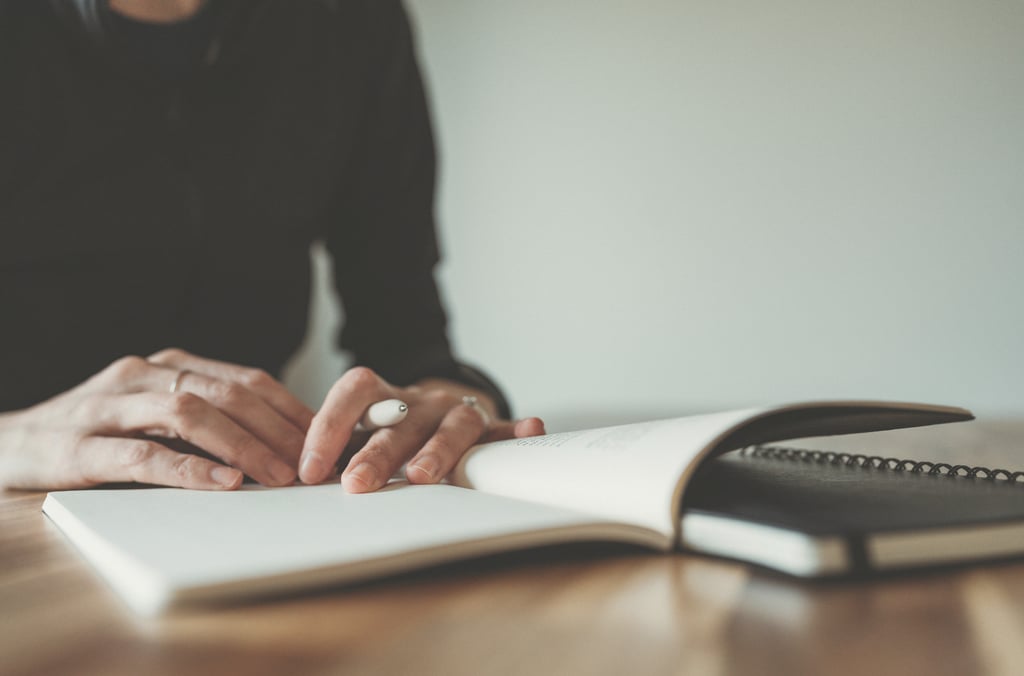
Notice your current “I am” statements. For a few days or a week, jot them down in your journal or put them in a notes app on your phone.
Reflect on your statements. Which one stands out to you the most? Which one do you say all the time? Which one, if you could turn it around, would have the most impact on you?
Start with a few statements you’re currently saying about yourself and experiment with new wording.
Begin with the sentence stems of “I am. . .” or “I am a woman who. . .”
For some of them, choose to follow the “I am” statement with evidence. For example, “I am resilient. I have bounced back from health challenges, raised great kids, and transitioned careers when I got laid off, so I can handle this too.”
These new statements are meant to feel supportive and hopeful when you say them – and maybe even excited.
Return to these new “I am” statements throughout the day until they become habitual.
Here are some examples:
I am a woman who finds meaning in every season of life.
I am capable of learning new skills. I’ve done it before, so I can do it again.
I am learning to make choices that honor my body and well-being.
Your Turn
Creating a beautiful life isn’t built on having the perfect set of circumstances; it’s built on how you see yourself and the world around you – because that drives your actions. And one of the ways that vision is shaped is through the intentional ways you speak to yourself – and about yourself to others.
As with any habit, it helps to start small. Begin today by pausing when you recognize one of those familiar negative thoughts. Then, quickly turn it around and say your new statement.
Over time, you will begin to notice a shift within you as you do this regularly. And these shifts in language will start to produce meaningful changes.
Here’s to the beautiful lives we’re creating, one small choice at a time.