The Simple French-Inspired Way to Edit Your Wardrobe
Tammy Renée | Creating the Beautiful Life
6 min read
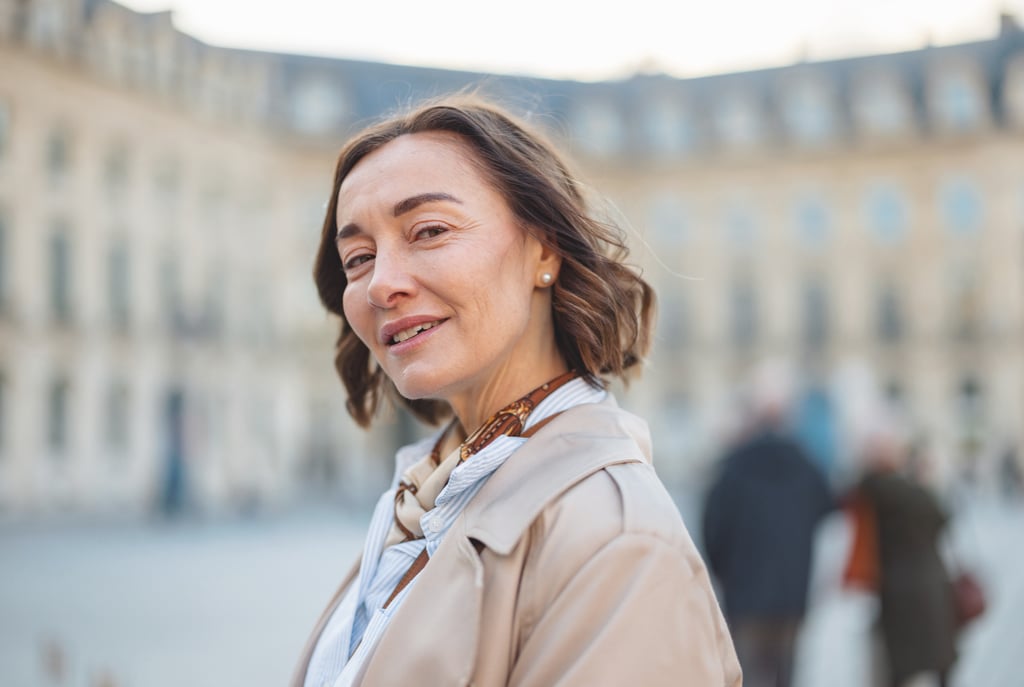
I’ll never forget the day—over twenty years ago now—when I touched down at the Charles de Gaulle airport in Paris, took a taxi to the Paris Saint-Lazare station, and planned to board a train headed to Bayeux, a small historic town in Northwestern France.
It was a culture shock for this small-town Texas girl who was, by then, living in Dallas.
I could list dozens of lessons I learned during that trip to France, some humbling and some amusing, but my biggest takeaway?
In France, bigger is not better.
Back home, we have a saying: Everything is bigger in Texas.
And whether from pride or humor, there is an unspoken belief that bigger often equals better.
That extends to our homes, our vehicles, and well, just about every part of our daily life, especially our closets.
So there I was, delayed for hours at the train station, with nothing to do but wait—and observe.
What I first noticed was the differences in how we, as women from different countries, presented ourselves.
I was wearing a red-and-white gingham top, capris, big hair, and a full face of makeup. I had two large suitcases and an overstuffed tote bag filled with comfort items I might need while waiting.
On the other hand, the many French women I saw waiting with me that afternoon looked different.
Their clothing was neutral and very understated. This extended to their makeup as well, except for the red lipstick I saw on some of them.
Their bags and luggage were small, and given their size, I assumed they were packed with much intention.
The contrast in these visuals intrigued me.
Whether one prefers the French style to the American style is a matter of personal preference.
However, as I came to learn, there are lessons to be learned from the French, no matter what style you love.
That afternoon in the train station marked the beginning of my assumptions being challenged.
Not just about travel or style, but about how much we carry, how much we think we need, and how easily abundance can spill over into excess.
And it was during the whole of that trip, spent in both Normandy and Paris, that I came to understand not only the style—but the philosophy beneath it.
It was about restraint and the confidence to have—and to carry—less.
Put simply, they edit.
Rather than "bigger is better," they believe that less is more.
And I've thought about my closet differently ever since.
What I Learned From the French
A French-inspired wardrobe isn't built by random impulse purchases or by seasonal overhauls.
Their wardrobe, instead, is thoughtfully curated over time.
The result is what most of us long for: fewer clothes, clearer choices, and mornings that feel less overwhelming.
It’s about elegant and meticulous editing.
Let me walk you through four things to keep in mind when editing your own wardrobe.


1. Begin by Observing, Not Eliminating
The French approach to anything is rarely about extremes, and the same goes for making changes in our closets.
So, before we start the editing process, let's take a week or two to notice the following:
What do you reach for repeatedly?
What stays untouched (and why)?
What feels like you when you put it on?
What makes you uncomfortable, where you’re constantly adjusting it or tugging at it?
What items of clothing make you feel insecure when wearing them?
Fairly quickly, you’ll probably notice patterns emerging. And those patterns will give you confidence in what you like—and what you don’t—before going on to the next step.
Editing, in this sense, is an exercise in becoming more self-aware.
2. Edit for the Real You, Not the Imagined One
Most of us don’t have one version of ourselves living in our closet—we have several.
There is the version of us from twenty pounds ago. The version of us when we were working in a corporate office. The life we had before children, after children, or before menopause.
We have many shifts that happen throughout our lives, and for every season, there are clothes for that once-lived life.
In addition, we often have clothes for the imagined (or idealized) versions of ourselves that we may one day become.
When all of those versions coexist in one small space, the result is a closet that feels overwhelming and chaotic.
That’s when it’s not just us storing clothes, but storing identities as well.
French women, however, tend to be more pragmatic and not so idealistic or scarcity-minded.
They dress for the life they actually have, not for one they might have someday.
Ask yourself:
What do my days honestly look like?
Where do I spend most of my time?
How do I want to feel in my everyday life?
What am I holding on to that belongs to a different version of me?
If your wardrobe reflects idealized sizes, past seasons, or an imagined life you aren’t actually living, your closet will always feel off (and have too much).
Just like me on that trip to France many years ago, if we’re holding on to things—just in case—then we’re carrying a heavy load, not just in our closet, but in our psyches as well.
Editing means letting go of clothes that don’t align with your actual life—so that you can focus on clothes that support you in the way you live now.
This single shift in thinking often removes most of your clutter.
Now, this is usually the moment when someone says, “But I paid a lot of money for these things.” If that’s you, I understand. I’ve been there too.
So, do what I have done in the past: I got a small storage bin, put my most beloved items in it, taped it up, and labeled it "Clothes for Later."
I also put the date I boxed them up. I put these in a separate storage place, other than my closet, where I wouldn’t see them.
The agreement that I made with myself is that if I hadn’t pulled from it in over a year, I would let it go.
Sometimes letting go of things we have loved is a process—and that’s okay.
3. Keep and Curate High-Quality Pieces
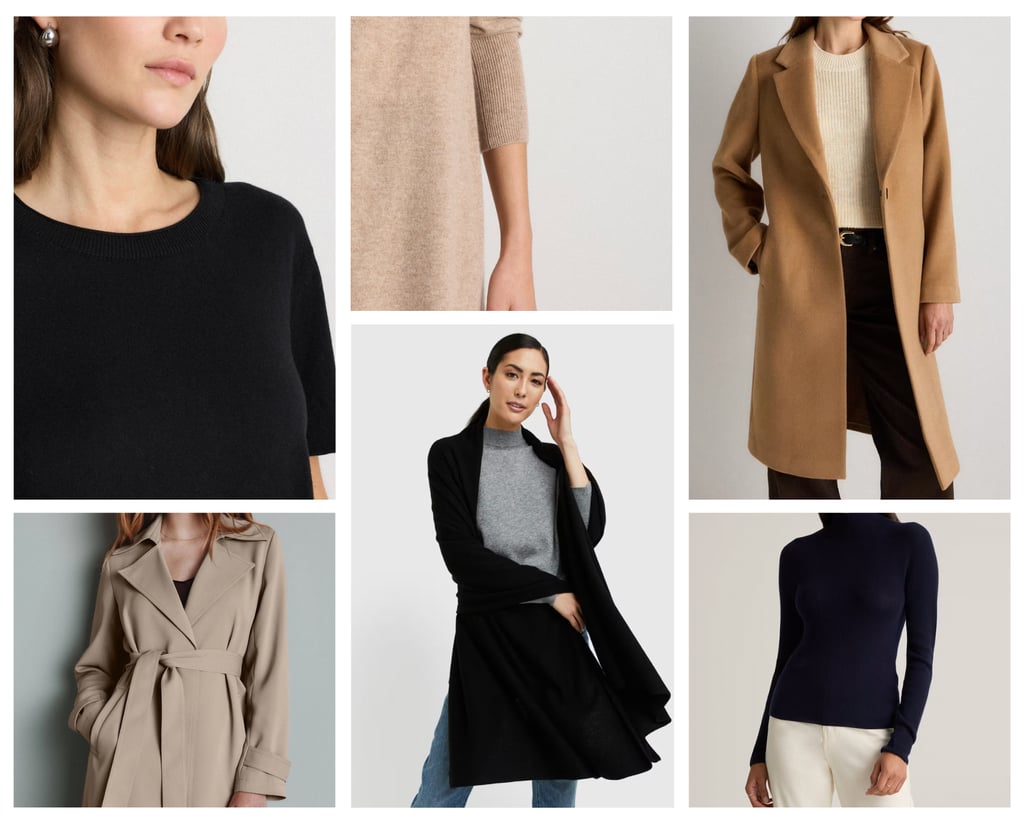
A French-inspired wardrobe values quality over quantity.
As you edit, look for pieces that are:
Made from natural fibers such as cotton, wool, linen, and silk
Constructed with tight, even stitching and smooth seams (no puckering)
Carefully aligned across seams if there is a pattern
Finished with zippers that glide easily and hardware that is securely attached
Made from fabrics that feel good against your skin
Designed with attention to detail (for example, thin fabrics that are properly lined)
Comfortable enough that they don’t require constant tugging and adjustments to feel okay
If you are concerned about cost, keep in mind that you will be buying fewer pieces overall.
In addition, many brands today offer quality without the designer price tag. Quince is one of my favorites for this.
4. Choose Your Color Palette
French wardrobes are known for their intentional color palettes — classic colors like black, navy, ivory, camel, gray, and olive green.
For this step, you’ll choose your personal color palette: your primary colors, then your pops of color.
For example, my primary classic color is black. The outfit I choose each day includes some black element: the pants, a tank top, or a sweater.
Then, my secondary color is cream. So I'll often wear black pants, a black top, and a cream-colored sweater in the winter. In the summer, I love cream linen pants with a black top.
Then I use a limited palette for my pops of color. Mine are olive green, deep red, and shades of pink.
These colors make me happy every time I wear them, and they're flattering with my dark hair and fair complexion.
And except for a few black-and-white striped shirts, the rest are solids, so everything can be mixed and matched.
When editing, notice:
Which colors do you wear most often?
Which shades flatter you?
Which colors complicate outfits rather than simplify them?
An intentional, restrained palette will make mornings easier to get ready for and always give you that put-together look.
Creating a Wardrobe With Intention
A French-inspired wardrobe is ever-evolving yet built around a few key pieces.
It evolves slowly, shaped by seasons, experiences, and self-knowledge.
Editing is not a one-time project but an ongoing conversation between who you are and what you wear.
To edit your wardrobe the French way is to choose less, but better.
To value ease over excess. To dress with intention rather than impulse.
When your clothes align with your life, getting dressed becomes simpler—not because you have nothing to wear, but because everything you see belongs.
That is the quiet beauty of an edited wardrobe.
Enjoyed this post?
Share it with a friend.
Here at Creating the Beautiful Life, I write about bringing care to our homes and our ordinary days, making them warm, personal, and meaningful.
If that sounds like the kind of life you’re creating, you might enjoy:
You’re also welcome to subscribe to From My Desk for monthly notes on home, the seasons, books, art, and other things worth lingering over.


© 2026 Creating the Beautiful Life
From My Desk
Thoughts on the art of living well — books, music, film, art, the warmth of home, seasonal pleasures, and ideas worth lingering over.
As an Amazon Associate I earn from qualifying purchases.