Creating Visual Quiet in a Noisy World
Tammy Renée | Creating the Beautiful Life
4 min read
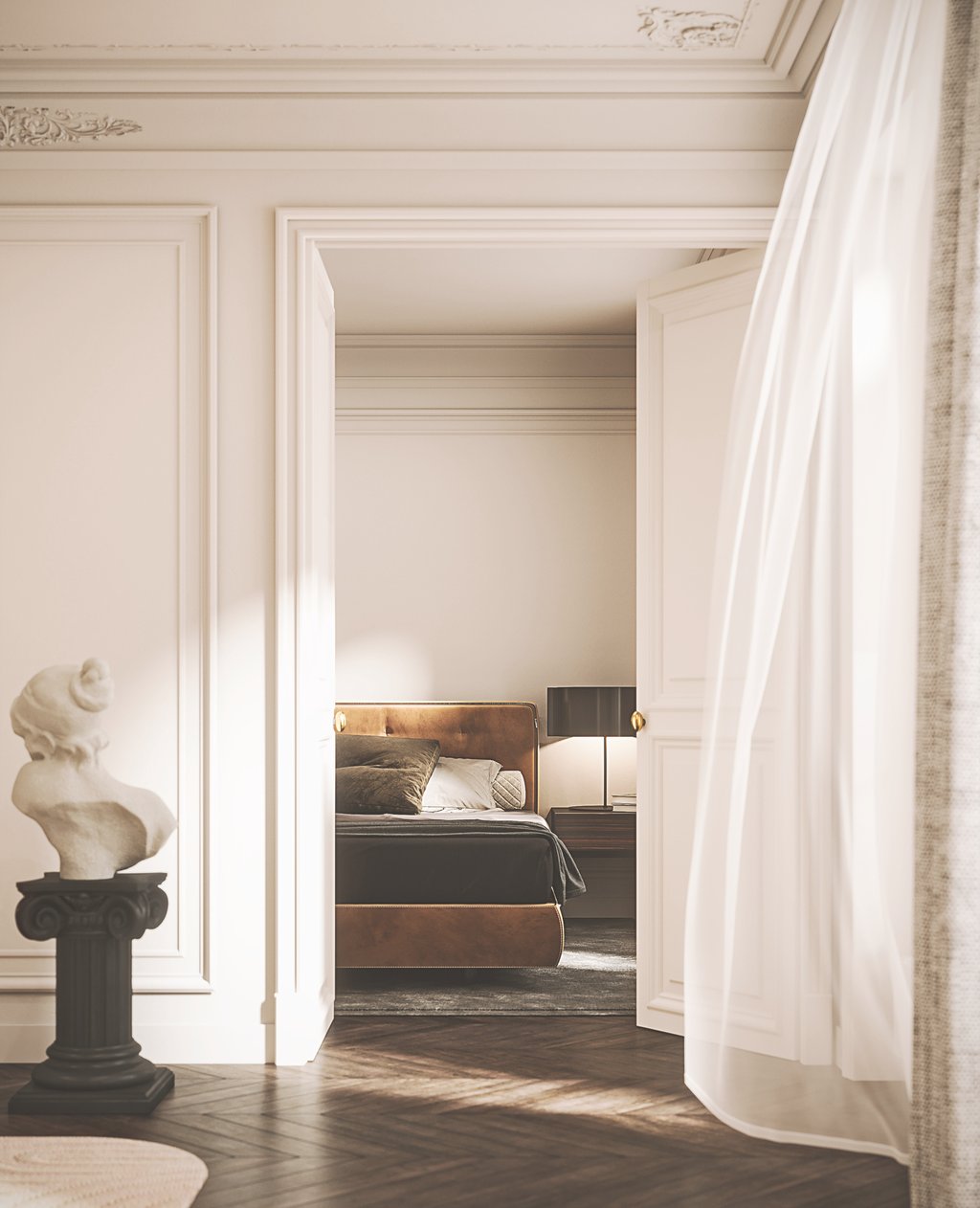

We live in a world that rarely allows itself to rest.
Noise and demands for our visual attention are everywhere—through screens flashing at us, unsettling new headlines round the clock, and our own full calendars silently urging us to keep up.
And even when our homes are quiet in terms of noise, they are often loud in another way—they are visually too full and overstimulating for our body, mind, and spirits to be restored.
Many of us find ourselves longing for something different.
Not the accumulation of more things, but fewer distractions.
Not for our homes to be perfect, but for them to be peaceful.
This is why I love and practice the art of visual quietness in my own home.
What Is Visual Quiet?
Visual quiet doesn't mean living with near-empty rooms and bare walls. It is about being intentional in shaping our environment so that our eyes—and, by extension, our nervous system—can rest.
It is, metaphorically speaking, the absence of visual noise.
When practiced, visual quiet allows the most important things to speak.
In everyday life, it looks like:
Fewer objects, chosen with great care and intention
Space between objects, allowing the home to breathe
Colors that calm rather than compete
Rooms that feel settled and at peace
Visual quiet is not about impressing others. It is about gently supporting the woman you are in this season of life.
Why We Crave It
Many of us have lived through high-intensity seasons—possibly pursuing our education and careers, raising children, managing busy households, or navigating major life changes.
And throughout it all, our senses were rarely given a chance to rest.
What once may have felt energizing to you—now may feel exhausting.
The desire for visual quiet is often your weary spirit saying, “I need less coming at me so I can hear myself think again.”
How Noise Sneaks into Our Homes
Visual noise accumulates unintentionally, little by little.
We keep things because they were once useful to us in a previous season
We hold onto décor that we no longer love because it was expensive
We allow surfaces to fill simply because we lack the time or energy
Over time, our homes begin to overwhelm us rather than restore us.
The good news is that visual quiet can easily be reclaimed one small area at a time.
Three Ways to Create Visual Quiet
I always know when things have gotten out of hand in my home when I begin to feel restless or more easily frustrated than usual.
And sure enough, when I pause and look around, I see small accumulations: a stack of mail and boxes in my foyer, a part of my kitchen counter taken over by miscellaneous items, and other corners where things have slowly gathered.
Begin practicing visual quiet with one simple question:
Does this space in my home add calm—or does it cause overwhelm every time I look at it?
1. Clear one surface at a time
Rather than tackling an entire room, focus on a single stack or surface. I like to put on my favorite music and work within whatever time I have—often just fifteen to thirty minutes.
Little by little, these small pockets of calm begin to accumulate. Over a week’s time, you’ll be surprised by how much more settled your home (and you) feel.
2. Choose colors that soothe you
Color is deeply personal. What feels calming to one woman may feel overwhelming to another—and our preferences often change as we move through different seasons of our lives.
Where I used to gravitate toward deep reds and purples (even painting entire rooms in those colors), I now find them too overstimulating.
Today, I feel more at ease with softer neutrals, especially ivory, shades of green, and soft pinks.
Visual quiet isn’t about following trends. It’s about becoming more aware of what colors you're drawn to during this season of life.
Then, slowly, as you make various purchases for your home, both large and small, bring in those new color choices.
3. Create intentional empty spaces
Visual quiet also comes from giving your eyes space to rest.
One small way I’ve practiced this recently is by placing a large sage-green pottery bowl on my black dining table and leaving it empty. By doing this, the bowl itself became a work of art.
I’ve come to love this practice. I don’t do it everywhere in my home because I also want a warm, collected feel.
However, I balance it out by choosing one wall on which I hang nothing, or one corner I leave empty instead of placing a plant or a chair. It’s about balance.
A Home That Lets You Rest
A visually quiet home does something subtle but powerful: it allows you to feel at ease and think more clearly.
It allows you to exhale when you return home.
It creates space for reflection and creativity.
And when you're with your loved ones, you can be more fully present.
There was a trend going around a while back: quiet luxury.
And to me, in this noisy world that never stops, visual quiet is one of the best ways to embody that idea of quiet luxury.
And in this season of your life—that is, perhaps, just what you need.
If this idea of visual quiet resonates with you, you may enjoy my free home reflection journal. It’s designed to help you notice which spaces in your home support you — and which ones may be asking for a little more care.
Enjoyed this post?
Share it with a friend.


© 2026 Creating the Beautiful Life
From My Desk
Thoughts on the art of living well — books, music, film, art, the warmth of home, seasonal pleasures, and ideas worth lingering over.
As an Amazon Associate I earn from qualifying purchases.